Meet Pew
A tiny green alien in a hoodie, a rainy New York and one design document: how PewRun started.
Listen to this post
Read in Dodz's voice, cloned with AI
Hi, I'm Dodz. This is the first post of the PewRun devlog, so let me start with the idea.
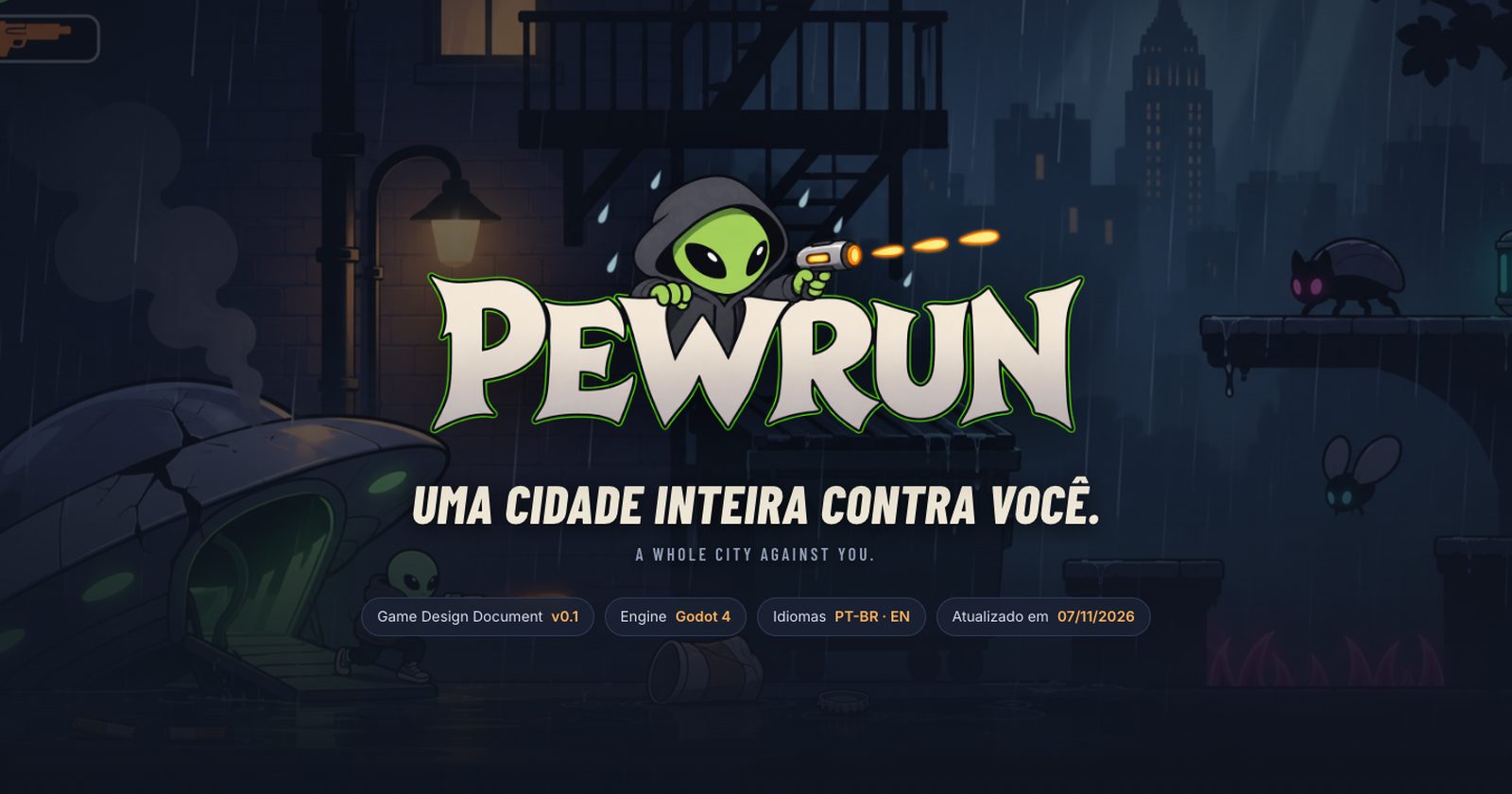
A flying saucer crashes into a gutter in New York. Out climbs Pew, a small green alien in a dark grey hoodie, holding a little plasma pistol. He is so small that a cockroach is a tank, a rat is a monster and a puddle is an ocean. Getting home means crossing an entire city that was never built for someone his size.
That's PewRun: a dark, hand-drawn 2D run and gun, told in chapters, set in New York on a rainy night.
Where it comes from
Three things were in my head from the start:
- Contra III: The Alien Wars. Frantic pace, weapons in capsules, bosses with several phases and attacks you can read before they land.
- Hollow Knight. Hand-drawn 2D, thin ink outlines, a melancholic mood and strong silhouettes.
- The tiny-world fantasy. Being minuscule in an ordinary place, where everyday objects turn into landscapes.
The last one is what makes it PewRun. A bottle cap is a shield, or a boat. A lit matchstick is a torch that keeps roaches away. A taxi driving past is a tidal wave.
One evening, one document
Before writing any code I wanted the whole game on one page. So the first evening became a game design document: a single HTML file with the story, Pew, the controls, the weapons, the bestiary, the art direction and a roadmap.
It also has five design pillars, which I now use to settle every argument with myself:
- Small vs. giant. Ground-level camera, enormous objects, ordinary creatures as epic bosses.
- Run-and-gun. Run, jump and shoot without stopping.
- A city that reacts. Every object in the play space does something.
- Light and water. Dramatic lighting and reflections, as look and as mechanics.
- Dark, with a heart. A hostile world, and a hero who is expressive without saying a word.
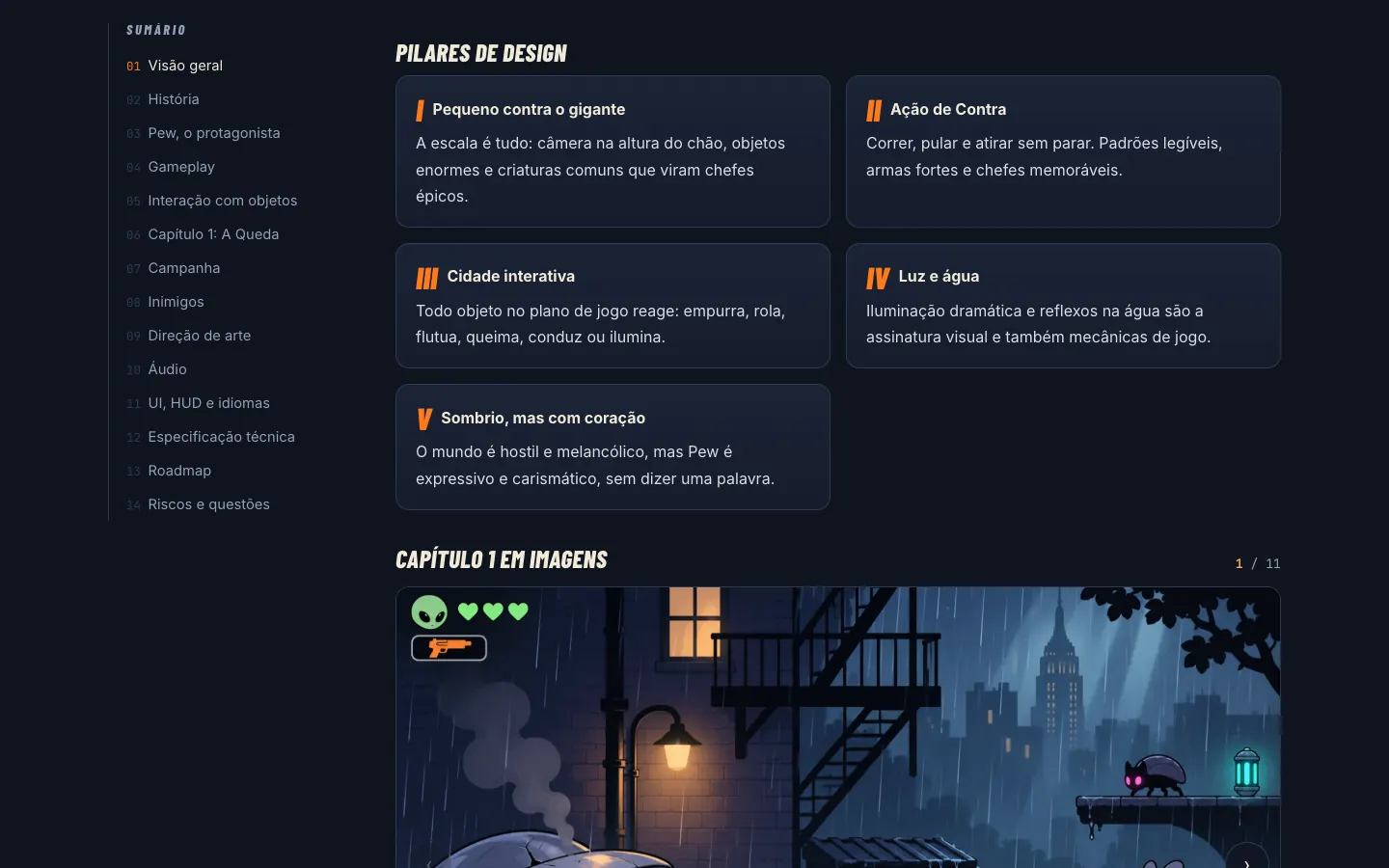
Only Chapter 1, The Fall, is really defined: from the crashed saucer down into the sewer, with a mini boss under a dumpster and a giant rat at the end. The rest of the campaign exists as a proposal, and I'm keeping it that way until Chapter 1 is fun.
One source of truth for the art
The second file I wrote was DESIGN.md: the style rules, the palette, Pew's design and the prompt blocks I use to generate images. The image presets don't store any prompt text themselves. They read those blocks from DESIGN.md by section title. Change a rule there, and every image generated after that follows it.
That evening ended with a GDD, a style guide, a logo and a folder of concept art. The art had a lot of problems, though. Pew kept growing extra hands. That's the next post.